Tuesday - Saturday: 11.00 - 19.00
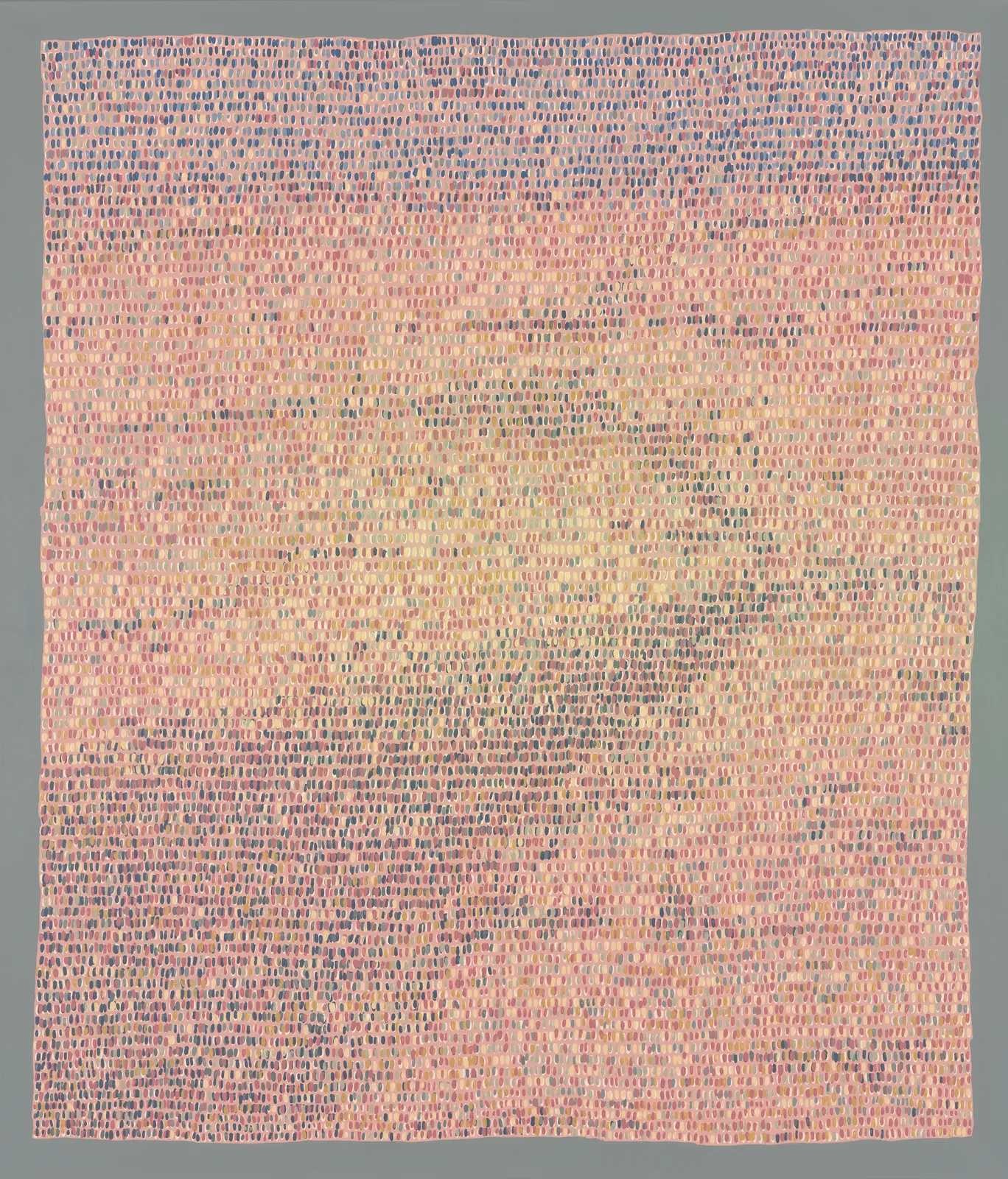
Defne Tesal
The Crack Turned Out to Be a New Path, 2025
Acrylic on canvas
136 x 117 cm
Copyright The Artist
Nereye Düşeceğini Bilmiyorum ve Yarık Meğerse Yeni Bir Yolmuş aynı boyutlarda, aynı renk skalasında, birbirini tamamlayan, belki öncesi/sonrası ya da bir olayın iki yüzü gibi okunabilecek iki resim. Biri gece,...
Nereye Düşeceğini Bilmiyorum ve Yarık Meğerse Yeni Bir Yolmuş aynı
boyutlarda, aynı renk skalasında, birbirini tamamlayan, belki öncesi/sonrası ya
da bir olayın iki yüzü gibi okunabilecek iki resim. Biri gece, biri gündüz; biri
gökte, biri yerde; biri parıltılı ve şatafatlı, diğeri yumuşak ve kıvrak. Sergiye ismini veren Nereye Düşeceğini Bilmiyorum’un hikâyesini Defne’den dinliyorum;
geçtiğimiz aylarda dünyaya bir meteor düşeceği konuşuluyor; “Hindistan’a da
düşebilir, Türkiye’ye de düşebilir” diye… Neyse ki okyanusa düşüyor ve yaşam
devam ediyor. Lars von Trier’in Melancholia filminden, melankolik kadın karakterin yaşamını yok edecek ve dünyanın sonunu getirecek asteroit yaklaşırken,
hayatını yaşanılmaz, anlamsız kılan hüznün sebebini ve çözümünü aynı anda
somutlaştıran bu korkunç ve muhteşem doğa olayını beklerken içini kaplayan
hazdan bahsediyoruz. Felaketler karşısında teslimiyet, teslimiyetle gelen uyumlanma ve huzurdan, zorlukların, zorunlu dönüşümlerin beklenmedik olanakları
açma ihtimalinden de.
I Don’t Know Where It Will Fall and The Crack Turned Out to Be a New
Path are two paintings of identical dimensions and colour range, which complete one another, like before and after scenes, or two perspectives on the
same event. One suggests night, the other day; one sky, the other earth; one
shimmering and flamboyant, the other soft and sinuous. Defne recounts the
story behind I Don’t Know Where It Will Fall, the work that lends its title to the
exhibition: In recent months, there were rumours that a meteor might strike
Earth, “It may fall in India, or in Turkey,” people said. Fortunately, it fell into
the ocean, and life went on. We talk about Lars von Trier’s Melancholia, and
how, while awaiting the asteroid that will end her life – and life on Earth – the
melancholic protagonist becomes almost ecstatic in the face of this terrifying
and spectacular act of nature, which at once manifests both the cause of her
suffering and its resolution. We discuss surrender in the face of catastrophe,
the adaptation and the serenity that may arise from that surrender, and the
possibility that hardships and forced transformations might open unexpected
opportunities.
boyutlarda, aynı renk skalasında, birbirini tamamlayan, belki öncesi/sonrası ya
da bir olayın iki yüzü gibi okunabilecek iki resim. Biri gece, biri gündüz; biri
gökte, biri yerde; biri parıltılı ve şatafatlı, diğeri yumuşak ve kıvrak. Sergiye ismini veren Nereye Düşeceğini Bilmiyorum’un hikâyesini Defne’den dinliyorum;
geçtiğimiz aylarda dünyaya bir meteor düşeceği konuşuluyor; “Hindistan’a da
düşebilir, Türkiye’ye de düşebilir” diye… Neyse ki okyanusa düşüyor ve yaşam
devam ediyor. Lars von Trier’in Melancholia filminden, melankolik kadın karakterin yaşamını yok edecek ve dünyanın sonunu getirecek asteroit yaklaşırken,
hayatını yaşanılmaz, anlamsız kılan hüznün sebebini ve çözümünü aynı anda
somutlaştıran bu korkunç ve muhteşem doğa olayını beklerken içini kaplayan
hazdan bahsediyoruz. Felaketler karşısında teslimiyet, teslimiyetle gelen uyumlanma ve huzurdan, zorlukların, zorunlu dönüşümlerin beklenmedik olanakları
açma ihtimalinden de.
I Don’t Know Where It Will Fall and The Crack Turned Out to Be a New
Path are two paintings of identical dimensions and colour range, which complete one another, like before and after scenes, or two perspectives on the
same event. One suggests night, the other day; one sky, the other earth; one
shimmering and flamboyant, the other soft and sinuous. Defne recounts the
story behind I Don’t Know Where It Will Fall, the work that lends its title to the
exhibition: In recent months, there were rumours that a meteor might strike
Earth, “It may fall in India, or in Turkey,” people said. Fortunately, it fell into
the ocean, and life went on. We talk about Lars von Trier’s Melancholia, and
how, while awaiting the asteroid that will end her life – and life on Earth – the
melancholic protagonist becomes almost ecstatic in the face of this terrifying
and spectacular act of nature, which at once manifests both the cause of her
suffering and its resolution. We discuss surrender in the face of catastrophe,
the adaptation and the serenity that may arise from that surrender, and the
possibility that hardships and forced transformations might open unexpected
opportunities.